By: Dr. Sean Parks (Dr. Sean Parks (Arie Re UK limited & US Forest Service (retired))

Presented on October 6, 2026

CLICK HERE TO WATCH THE RECORDED PRESENTATION

Abstract: Fire activity has increased across much of western North America in recent decades, contributing to widespread concern that contemporary fire years are unprecedented. Yet in many forests, especially those historically shaped by frequent, low- to mixed-severity fire, there is still far less fire than occurred prior to widespread fire exclusion. This “fire deficit” is not just a historical artifact. It is a key reason many forests have accumulated fuels, shifted in structure and composition, and become more vulnerable to severe ecological effects, drought, and climate-driven change.

In this webinar, I will place recent increases in area burned within a longer historical context using multi-century tree-ring fire-scar records and contemporary fire datasets. I will discuss where fire deficits remain most pronounced, why recent extreme fire years are still best understood against this deeper historical baseline, and why excluding fire indefinitely is unlikely to sustain many fire-prone forests. I will then explore what this means for the future, including how prescribed fire, managed wildfire, and strategic fuel treatments can help restore more resilient fire regimes. These same issues also matter for communities: the legacy of fire exclusion, combined with climate warming and continued development in fire-prone landscapes, is increasing the potential for fires that threaten homes, infrastructure, insurance markets, and local economies. The central challenge is not simply whether there will be more fire, but whether future fire occurs under conditions that support ecological resilience while reducing the likelihood of catastrophic losses.

By: Dr. Ryan DeSantis (Oklahoma State University)

Presented on January 13, 2026

CLICK HERE TO WATCH THE RECORDING

Abstract: In forests of the Cross Timbers ecoregion, an increase in eastern redcedar (Juniperus virginiana; ERC) has resulted in a novel fuel type with higher fuel load, different fuel architecture, and potentially increased fire risk. As a novel fuel type, ERC has not been modeled in common fire modeling programs like FlamMap or BehavePlus. We modeled test burns in mechanically treated and untreated ERC-encroached Cross Timbers forests to assess common fire modeling program capability to match observed fire behavior using a commonly used regional fuel model, best match fuel model, custom fuel model, and plant canopy inputs. All Nash-Sutcliffe efficiency values suggested programs performed poorly in capturing observed flame length on a site-specific scale. The few percent-bias values that were within satisfactory performance levels suggest that at a landscape scale, the fuel model used for appropriate ERC mechanical treatments might be able to determine general fire behavior. Our model tests were intended to model fires and appropriate ERC mechanical treatments, but instead demonstrated the need for improved modeling of ERC-encroached Cross Timbers forest. This study provides valuable insight for future research and agencies that use common fire models, particularly for understanding limitations of current modeling capabilities.

By: Dr. Jacob Fraser (US Forest Service Northern Research Station)

Presented on January 6, 2026

CLICK HERE TO WATCH THE RECORDING

Abstract: Old-growth forests provide important ecosystem services in the form of biodiversity, resilience, and unique species assemblages. To better understand the processes that shape the complex structural and compositional attributes across space and time, researchers frequently study the rare remaining examples of old-growth existing today. This webinar will cover the results from ongoing long-term monitoring projects focused on remnant old-growth forests across the southern tier of the Central Hardwoods region focusing on temporal trends in species composition and forest structure as well as the spatial pattern of these characteristics across a site. A major objective of quantifying these dynamic processes is to provide managers with information to incorporate into the landscape-level planning of maturing forests in the region.

By Dr. Emily Geest (Oklahoma City Zoo)

Presented on December 16, 2025

CLICK HERE TO WATCH THE RECORDING

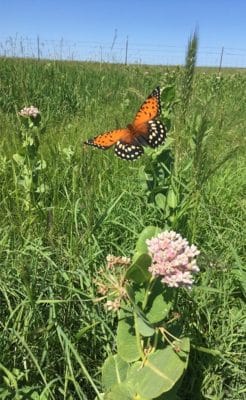
Abstract: Grassland butterflies are undergoing worldwide population declines due to habitat loss and degradation. To manage remaining grasslands, patch-burn grazing, prescribed fire, and mowing/haying are commonly implemented management practices across the southern Great Plains. However, the impact of management on the butterfly communities is complex, and the effects of different management regimes on butterfly communities are not clear. This research investigated the impact of time since prescribed fire and season of fire on butterfly communities and butterfly floral resources in cattle-grazed rangelands in north-central Oklahoma. Butterfly species richness and diversity as well as butterfly floral resources varied by treatment suggesting that while one management treatment may not be adequate for all species, a patch-burn grazing approach to management has the potential to benefit a wider range of species.

By Dr. Mark Turner (Oklahoma State University)

Presented on October 21, 2025

CLICK HERE TO WATCH THE RECORDING

Abstract: Prescribed fire commonly is used following canopy reduction to manage upland hardwoods for various objectives. There has been increased interest in the use of growing-season fire to open the burn window and promote different plant responses, but historically most fire has been implemented during the dormant season. We applied 6 prescribed fires during the early growing-season (EGS) and late growing-season (LGS) following a shelterwood harvest with reserves to stands in east Tennessee to evaluate understory vegetation, habitat for deer and turkeys, and oak regeneration. We found that tree and bramble coverage, as well as understory structure for turkey nesting and deer bedding, was greater following LGS fire. Deer forage biomass was increased with both fire treatments relative to a closed-canopy, unburned Control, but there was greater nutrition available following EGS fire. Deer and turkey detections generally were greatest following EGS fire relative to LGS or Control. Understory and midstory tree regeneration also differed by treatment. Shelterwood treatments without fire had a developed midstory dominated by mesophytes. Burned treatments had a limited midstory, with total oak and red oak understory stem counts being greatest following LGS fire. White oak understory stem counts were greater following EGS compared to Control, and both burn treatments decreased understory mesophytes. Our results suggest fire may be used during different portions of the growing season to meet management objectives in upland hardwoods.

By Dr. Victoria Donovan (University of Florida)

Presented on October 7, 2025

CLICK HERE TO WATCH THE RECORDING

Abstract:  Dr. Donovan will provide a summary of her lab’s ongoing research investigations into changes in large (>200 ha) wildfire activity across multiple scales in the eastern U.S. and the interacting factors affecting wildfire risk. Specifically, we found shifting wildfire regime characteristics across south and central ecoregions in the east that include increasing wildfire number, size, and annual occurrence, along with changes in wildfire seasonality.  Just under half of all wildfires burned within the wildland-urban interface (WUI), where the greatest risk to human life and property from wildfires exists. Increases in large wildfire are largely occurring outside the WUI, though these wildfires tend to be closer to the WUI than expected at random. We find factors such as suppression potential, weather conditions, and patterns in woody cover influence the WUI-wildfire dynamic, but relationships vary regionally. We also identified long-term increases in woody cover across eastern ecoregions, linking higher levels of woody cover to heightened wildfire risk in multiple locations. Further investigations have found that woody cover interactions with short-term drought strongly predict large wildfire occurrence across numerous eastern ecoregions. While further research into the drivers of changing large wildfire patterns is needed, we suggest the strategic application of fuels management along with the development of fire-resistant homes and buildings to enhance community resilience to wildfire in the east.

By Connor Adams (Center for Environmental Health, Monitoring, and Management; previously Stephen F. Austin State University)

Presented on January 14, 2025

CLICK HERE TO WATCH RECORDING

Abstract: Anthropogenic activities in disturbance-mediated ecosystems might affect certain ecological processes that, in turn, can affect the stability and resilience of those ecosystems. In upland pine forests, land-use practices such as intensive silviculture and fire suppression have contributed to the loss of diversity-rich pine savannahs throughout the southeast. Whereas the application of management strategies has been shown to alter forest structure in pine ecosystems, less is known about how these efforts structure predator communities, or influence pathways of energy flow and the consumer–resource relationships therein. Here, we investigated the effects of frequency of forest management on 1) snake community structure utilizing taxonomic and functional approaches, and on 2) the trophic structure and resource use of these snake communities in two pine forests under different management regimes. Specifically, we investigated the responses of snake assemblages in the context of restoration efforts, comparing and contrasting these responses between high practice frequency (i.e., short burn intervals and thinning) and low practice frequency sites (i.e., long burn intervals and no thinning). We sampled snakes, prey, and dominant basal resources across each site for three summers from 2018 to 2020. From this sampling effort we compared taxonomic diversity and community-wide metrics of functional diversity from snake traits. Using stable isotope analysis, we compared community-wide metrics of trophic structure and generated isotopic mixing models to determine the relative contribution of resources to snake consumers. Taxonomic diversity was greater at the high-frequency site than in the low-frequency site, while functional diversity was similar between treatments. Functional redundancy was observed to increase with increasing forest management practice frequency, despite differences in taxonomic diversity and community-weighted means of traits between predator assemblages in each treatment. We also found that that species in the high-frequency site exhibited increased trophic redundancy. The low-frequency site supported fewer snake species that relied on a wider range of resources and occupied a wider range of relative trophic positions. Mixing models of consumer–resource relationships, and prey relative abundance, indicated that snakes were more generalized in their resource use in the high-frequency site, and utilized a broader diversity of prey more evenly. In contrast, snakes in the low-frequency site were more specialized in their prey use. We suggest that anthropogenic activities mimicking natural disturbances can drive food-web structure in these forest ecosystems. Increased frequency of forest management practices such as prescribed fires and thinning operations might support snake species diversity while also increasing redundancy (e.g., functional redundancy and trophic redundancy). Consequently, such management applications can lead to greater stability and resilience in pine-forest ecosystems. Our research further highlights the importance of ecological restoration that incorporates functional perspectives to ensure the health of pine ecosystems.

By Dr. James Martin, The University of Georgia

Presented on January 7, 2025

**Cohosted with the Southern Fire Exchange**

CLICK HERE TO WATCH RECORDING

Abstract: Temperate woodlands are biodiverse natural communities threatened by land use change and fire suppression. In the Baraboo Hills (southern Wisconsin, USA) The Nature Conservancy (TNC) is managing for oak woodland habitat within extensive forest preserves with the goal of maintaining biodiversity and promoting fire-dependent species and natural communities once widespread in the Midwestern USA. Because the diversity of woodland species spans many taxa, efficiently quantifying biodiversity and understanding site-specific management effects can be challenging. In this presentation, UW-Madison PhD candidate Maia Persche will discuss results from a three-year field study across managed and unmanaged sites and describe how woodland management results in changes to soundscapes, and how this bioacoustic signature can be integrated into ecological monitoring projects. Ann Calhoun, TNC’s Driftless Area Resilience Manager, will share how insights gained through this research approach can help us understand the biodiversity response to stewardship activities and how takeaways may inform adaptive management over time.

By Maia Persche (University of Wisconsin-Madison) and Ann Calhoun (The Nature Conservancy-Wisconsin)

Presented on December 3, 2024

CLICK HERE TO WATCH RECORDING

Abstract: Temperate woodlands are biodiverse natural communities threatened by land use change and fire suppression. In the Baraboo Hills (southern Wisconsin, USA) The Nature Conservancy (TNC) is managing for oak woodland habitat within extensive forest preserves with the goal of maintaining biodiversity and promoting fire-dependent species and natural communities once widespread in the Midwestern USA. Because the diversity of woodland species spans many taxa, efficiently quantifying biodiversity and understanding site-specific management effects can be challenging. In this presentation, UW-Madison PhD candidate Maia Persche will discuss results from a three-year field study across managed and unmanaged sites and describe how woodland management results in changes to soundscapes, and how this bioacoustic signature can be integrated into ecological monitoring projects. Ann Calhoun, TNC’s Driftless Area Resilience Manager, will share how insights gained through this research approach can help us understand the biodiversity response to stewardship activities and how takeaways may inform adaptive management over time.

By: Dr. Griffin Williams, US Forest Service Pacific Northwest Research Station

Presented on November 12, 2024

CLICK HERE TO WATCH RECORDING

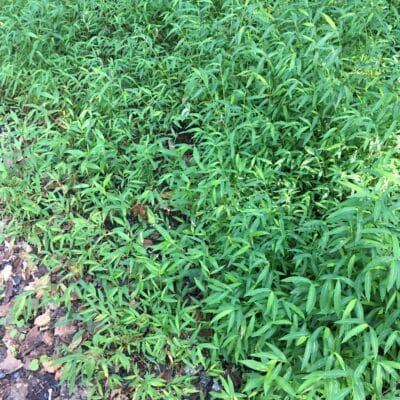
Abstract: Oak restoration is often successful at promoting native, fire-tolerant forbs and oak regeneration through prescribed burning and canopy thinning, but these disturbances can also promote non-native plant invasions. Japanese stiltgrass, Microstegium vimineum, is a common invader of restoration sites and one of the most problematic species in the eastern United States from a management perspective. How can we best manage the invasion of non-native plant species that thrive under restoration disturbances, and what makes Japanese stiltgrass such a good invader of these ecosystems? In this talk, I will discuss recent findings on the competitive ability of Japanese stiltgrass and its’ impact on native plant regeneration in relation to the oak woodland restoration efforts at the Strawberry Plains Audubon Center in Holly Springs, MS. I’ll also share management considerations relating to combating invasive plants and promoting natural oak regeneration while restoring.